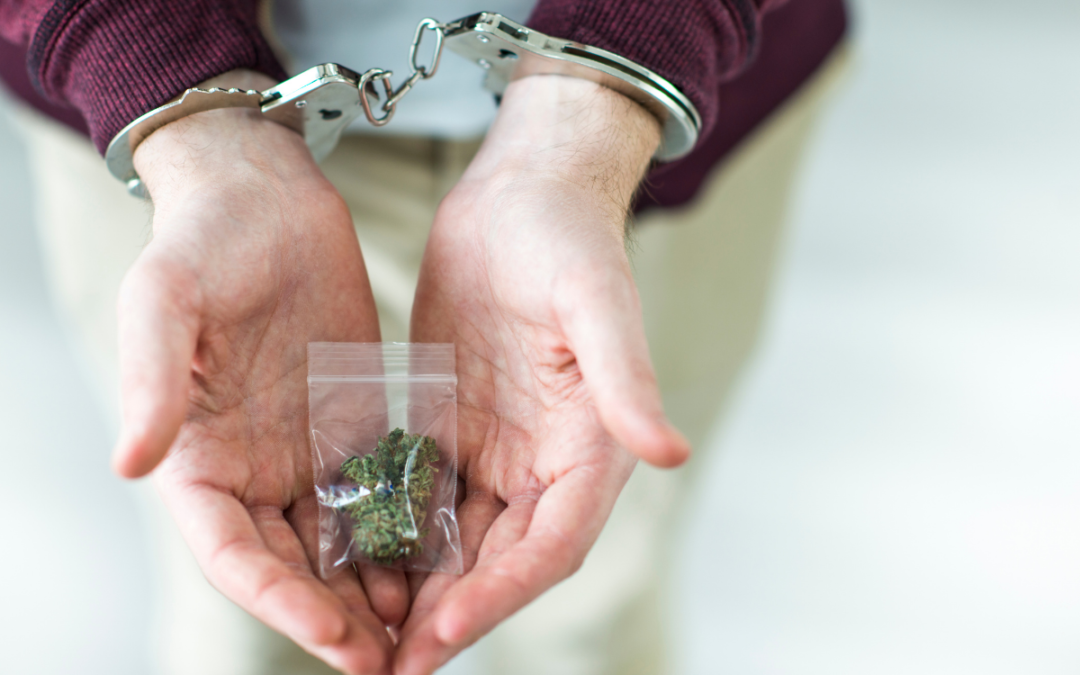
While a new cannabis law is being written, you’ll want to stay up to date on marijuana drug charges in Rochester NY. Here’s one example of why: even as the state hammers out the details of the new cannabis law, some store owners thought they found a loophole that enabled them to sell marijuana to customers. But the New York Cannabis Board says the scheme is illegal.
Earlier, a Henrietta CBD dealer began selling $65 t-shirts and including three ounces of marijuana as a “gift.” The store claimed these transactions were legal since it’s legal to gift up to three ounces of marijuana to persons over 21. But the loophole was short-lived. “There is no gray market in New York state,” declared NYCB Chair Tremaine Wright. “This conduct is not legal and must stop. Individuals who do not cease run the risk of severe financial penalties.” Marijuana sales at pop-up stores and carnivals or fairs are likewise illegal.
Safety concerns prompt many officials to clamp down on marijuana gifting and other questionable activities. In 2019, black market THC vape cartridges sent over 2,000 people to area hospitals. Sixty-eight of them died.
Post-Possession Issues
Many people assumed that marijuana legalization automatically meant marijuana availability. Unfortunately, that’s not the case. Under pressure from law enforcement groups that opposed the law, rule-makers are in no hurry to implement the legislature’s directive. There are some misunderstandings about some other aspects of the marijuana law as well.
Possession of three ounces or less is the only component of this law that has no grey area. Typically, an ounce of marijuana produces about forty joints. If a person has more than three ounces of marijuana, or one hundred twenty joints, more than likely, that marijuana is not exclusively for personal use.
The law now prohibits police officers from arresting individuals on minor possession charges. However, New York law still allows police officers to detain such individuals and interrogate them about the source of the marijuana. If the defendant is uncooperative, police officers often file discretionary charges, such as disorderly conduct. According to the New York Penal Law, it is a violation to “cause public inconvenience, annoyance or alarm, or recklessly create a risk thereof” by:
Making an “unreasonable noise,”
Using obscene language,
Making an obscene gesture,
Disrupting traffic, which could mean walking too slowly across the street, or
Creating “a hazardous or physically offensive condition by any act which serves no legitimate purpose.”
Many of us do at least one of these things pretty much every day. So, although it’s technically legal to possess pot, openly possessing it in a public place and in the presence of a law enforcement officer is usually a bad idea. Disorderly conduct is a traffic ticket. However, at a minimum, defendants must still make bail, hire a Rochester criminal defense lawyer, and go through the system.
Marijuana Usage Issues
Lots of people have questions about smoking pot in vehicles. It’s perfectly legal for passengers to use marijuana inside moving cars, at least in most cases. Using marijuana could mean smoking it or consuming marijuana edibles. However, police officers can still give these individuals a hard time, as outlined above.
Technically, it’s also legal to operate a motor vehicle while using marijuana. However, it’s illegal to operate a motor vehicle under the influence of marijuana. Generally, people who use marijuana, even if they only take one hit, are under the influence of this drug. When people drink alcohol, the impairing effects accumulate over time. But marijuana works the opposite way. The high hits almost immediately and fades over time.
On a related note, the marijuana law effectively ends the age-old “I smelled marijuana” excuse, which has justified countless police stops over the years. The odor of marijuana no longer constitutes probable cause since use is mostly legal.
Other prohibited uses include transporting marijuana across state lines and smoking marijuana inside public buildings. Employers, landlords, and other such individuals may also prohibit marijuana use.
Worried about Marijuana Drug Charges in Rochester NY? Contact an Experienced Attorney
Marijuana is legal in New York, but only under certain circumstances. For a free consultation with an experienced Rochester criminal defense lawyer, contact the Law Office of Frank Ciardi. Convenient payment plans are available.
If you’re planning to celebrate the New Year but concerned about legal consequences of impaired decision-making, you’ll want to keep in mind an experienced Rochester DWI attorney. The 2021 holiday season promises to be the most normal one we’ve had in a while, so it’s understandable to want to let loose. Hopefully, that doesn’t include drinking and driving under the influence, but we all know how alcohol inhibits our better judgment.
Even before the pandemic hit, the statistics regarding New Year’s Eve alcohol consumption were sobering (pardon the pun):
50% of people consumed alcohol during family holiday parties, primarily to reduce the stress and anxiety such gatherings often entail,
24% experienced blackouts,
16% said alcohol prompted them to say or do things they regret (the specifics should not be printed on a family-friendly website), and
13% picked up a DWI charge.
Frequently, New Year’s Eve DWIs also have some unique legal issues. These issues, along with the inherent weaknesses in many of these cases, often mean that a Rochester DWI attorney can successfully resolve even the scariest and most complex matters.
Common Defenses a Rochester DWI Attorney May Use
Frequently, intoxication, or the lack thereof, is the only material issue in a DWI case. Going by the book, intoxication is relatively easy to prove in New York. The Empire State has a per se DWI law. But the evidence available is not always solid.
Breathalyzers are sophisticated devices, but they are not flawless. Temperature sensitivity is often an issue during the winter. Some police departments only calibrate their Breathalyzers once every sixty days. There’s a big difference between the weather in October and December in upstate New York. Individual temperature sometimes comes into play as well. A three-degree fever can drive a Breathalyzer result several points higher.
If the state must rely on circumstantial evidence from the Field Sobriety Tests, which it must in about a fifth of cases, the evidence issues are even more acute. The notorious walking-a-straight-line test is a good example. It’s challenging to walk a line heel to toe as distractions abound, such as strobe lights flashing in the background. Additionally, it is almost impossible to walk an imaginary line heel to toe, whether the subject is drunk or sober.
DWI Roadblocks
Sobriety checkpoints are pretty standard in Monroe County around holidays associated with drinking and driving, such as New Year’s Eve and the Fourth of July. Officers do not need reasonable suspicion to detain motorists if the DWI roadblock meets specific legal requirements, such as:
A supervisor-level decision to set up a roadblock,
A safe location, like a non-intersection on a surface street,
Pre-checkpoint publicity that creates general awareness about the roadblock,
Adequate signage preceding the checkpoint, and
A neutral detention formula, such as every third or fourth vehicle.
Motorists have rights at checkpoints as well. They need not answer questions or even roll down their windows. Police officers usually shadow such motorists for at least several blocks, so be advised.
Holiday STEP Campaigns
Selective Traffic Enforcement Programs, which usually have catchy marketing names like “Click It or Ticket” and “Drive Sober or Get Pulled Over,” are also common during the holidays. Usually, government grants pay for officer overtime and other STEP-related expenses. Since many officers feel real or imaginary pressure to make as many arrests as possible to justify the funding, some officers occasionally take shortcuts.
Common shortcuts include a lack of reasonable suspicion for the stop and a lack of probable cause for the arrest. Reasonable suspicion is an evidence-based hunch of criminal activity. A hunch alone, such as a driver who didn’t look right or just left a bar, does not hold up in court.
The aforementioned field sobriety tests usually serve as probable cause. During STEP campaigns, officers sometimes skip straight to the arrest without using the FSTs. Marijuana is legal in New York, but only under certain circumstances.
Get a Rochester DWI Attorney on Your Side
For a free consultation with an experienced Rochester DWI attorney, contact the Law Office of Frank Ciardi. We routinely handle matters in Monroe County and nearby jurisdictions.
If you’ve been busted for illegal possession or consumption of a substance, you may have to undergo court-ordered drug and alcohol treatment. Learn what the implications are, along with your options as the defendant.
New York, like most other states, usually requires DWI defendants to undergo alcohol treatment. The Vehicle and Traffic Code sets out the general procedure. The specific procedure varies in different counties and even in different courts.
Generally, if the defendant blew less than a .15, the law requires an alcohol “screening.” Usually, a screening is a written test with questions about the frequency of alcohol use and other habits. If the defendant refused a chemical test or blew higher than a .15, there is a mandatory “assessment.” A certified counselor must perform this assessment. This professional usually recommends inpatient or outpatient treatment.
Some alternatives might be available. Instead of an alcohol evaluation, a defendant might be able to take the seven-week Impaired Driver Program. However, specific qualifications apply. For example, the defendant must normally be a New York resident. Furthermore, the judge may waive the treatment program if the defendant shows “good cause.” We’ve never seen a defendant win this argument.
In most cases, the assessment or Impaired Driver Program must be completed before sentencing. Many a favorable plea bargain has unraveled because the defendant had issues satisfying this requirement. A Rochester DWI lawyer can ensure that defendants get the help they need in this critical phase. Furthermore, an attorney ensures that the bar is not set too high.
Twelve-Step Program after DWI
Courts often allow defendants to join twelve-step programs if the DWI was a first-time and one-off affair. For example, Tim, who has no prior DWIs, might get a little carried away at a bachelor party. Alcoholics Anonymous, which began in Ohio in 1935, now has over two million members. AA usually does not help people who are chemically dependent on alcohol. But it often does help people who have trouble controlling their impulses and who need a solid support network.
AA is usually a lifetime process. Most people start by attending meetings several times a week. Then, as they progress through the steps, they attend meetings less and less.
These groups usually meet in churches or community centers. Most likely, there are several chapters near a defendant’s home or office. Furthermore, there are no mandatory dues, and the process is entirely confidential. Twelve-step programs do not turn everyone’s life around, but they certainly cannot hurt.
Usually, Monroe County judges want a defendant to reach a milestone, such as a period of sobriety or several meetings before they approve the plea bargain. An attorney needs to make sure the defendant engages with a nearby group and reaches that milestone as quickly as possible.
Outpatient Treatment and Rochester DWI Lawyers
Most DWI defendants must obtain outpatient treatment. These programs vary significantly. Some are just short of inpatient programs, while others are twelve-step programs on the other end of the scale.
Convenience and cost are sometimes concerns in this area. There are many outpatient alcohol treatment programs in Monroe County, but they aren’t as numerous as twelve-step programs. As for cost, these programs usually are not cheap. Health insurance might or might not cover the expense.
Before sending a defendant to a program, many Rochester DWI lawyers scrutinize the intake portion. Some programs require participants to admit they are alcoholics. If the defendant denies this, the counselor maintains that the defendant is in denial and cannot be helped.
As for the specific program requirements, most defendants understandably want the bare minimum. However, a Rochester DWI attorney must ensure that the bare minimum is sufficient for the judge.
Inpatient Treatment
Defendants with two prior DWIs or a BAC level above .24 must usually complete inpatient treatment. These programs typically use highly invasive measures, like drugs and other therapy. Additionally, after they leave the center, most participants must spend some time at a halfway house or similar facility.
Counselors usually only recommend inpatient treatment in extreme cases. In addition to a person who clearly has a severe alcohol problem, inpatient treatment might also be appropriate for extremely belligerent defendants.
Talk to a Diligent Attorney About Court-Ordered Drug and Alcohol Treatment
The alcohol evaluation can make or break your DWI plea bargain agreement. For a free consultation with an experienced Rochester DWI lawyer, contact the Law Office of Frank Ciardi. After-hours visits are available.
Most people who have seen a cop movie or TV show are somewhat familiar with the Miranda Rights. However, most people do not know how broad these rights are and how early these rights apply in the arrest and detention process.
Furthermore, most people have never heard of Berghuis v. Thompkins, a 2010 Supreme Court case which, according to various legal scholars, has “turned the clocks back” and effectively “gutted Miranda.” Berghuis requires defendants to invoke their Miranda rights affirmatively. Simply not saying anything during questioning could be considered a waiver.
Your Miranda Rights: What to Know
Although the Supreme Court handed down Miranda v. Arizona in 1966, failure to properly administer the Miranda rights is one of the most common procedural defenses in Monroe County criminal cases. The burden of proof is so high in a criminal case that it’s almost impossible for the state to obtain a conviction if a Rochester criminal lawyer can exclude any illegally obtained evidence.
How We Got Here
When Republican President Dwight Eisenhower appointed Earl Warren to the Supreme Court in 1953, Eisenhower had no idea Warren would preside over one of the most liberal courts. The Warren Court is widely known for civil rights decisions, like Brown v. Board of Education, the landmark desegregation decision. The Justices also issued several important criminal law rulings, such as:
Terry v. Ohio (officers need reasonable suspicion before they detain suspects),
Katz v. United States (investigators must have a search warrant to tap a phone),
United States v. Wade (limits on police lineups),
Escobedo v. Illinois (the right to remain silent),
Brady v. Maryland (prosecutors must give exculpatory evidence to defense lawyers),
Gideon v. Wainwright (right to counsel) and
Mapp v. Ohio (search warrants and the exclusionary rule).
The pendulum of justice swings back and forth. We mentioned the recent limits on Miranda above. Search warrants are another excellent example. Over the years, courts have carved out so many exceptions to the warrant requirement that the rule itself does not come up very much anymore.
Content Issues and the Miranda Rights
The Miranda rights cover the Fifth Amendment’s right to remain silent and the Sixth Amendment’s right to counsel. The Fifth Amendment covers more than verbal silence. It also applies to physical silence. Defendants need not appear in lineups, pose for pictures, or perform field sobriety tests, like the walk-and-turn. To be sure, there are consequences for such refusals.
Police officers almost always assume uncooperative defendants have something to hide and are therefore guilty. However, the arrest process is a lot like a runaway train. Once it starts, it only ends one way, at least in most cases.
We mentioned DWIs and the Fifth Amendment. There are some Sixth Amendment issues in this area as well. Since the chemical test is such an essential point in these cases, many Rochester criminal lawyers have argued that defendants should be able to talk to lawyers before they say yes or no.
Incidentally, the Miranda Rights are not just a formality. Officers cannot read defendants their rights if the defendants are passed out. Additionally, if English is not a defendant’s first language, the police department must generally provide an interpreter.
Timing Issues
In the movies, cops usually read defendants their rights as they handcuff them. In the real world, if police officers wait that long, they have already violated the law.
Under current law, defendants must be apprised of their Miranda rights when custodial interrogation begins. Let’s break these things down a bit.
Custody does not mean confinement. Instead, defendants are in custody when they do not feel free to leave. Most people don’t feel free to leave once an officer says, “license and registration, please.” Some people don’t feel free to go when they see flashing lights in their rearview mirrors.
Similarly, interrogation does not mean asking questions. Experienced officers know how to extract information without asking questions. So, if a police officer says anything without first administering the Miranda warnings, whatever the defendant says or does next is probably inadmissible in court.
Talk to a Diligent Attorney About Your Miranda Rights
If officers don’t properly Mirandize defendants, judges usually throw the cases out of court. For a free consultation with an experienced Rochester criminal lawyer, contact the Law Office of Frank Ciardi. We routinely handle matters in Monroe County and nearby jurisdictions.
NY’s Rules Have Changed For Making a Call From Jail
As of March 2021, Monroe County changed the rules for making a call from jail, so that the first call is no longer free. Because officials overcharged inmates for years and there is so much money in the telephone trust fund, the county now gives inmates up to seventy-five minutes a month of free phone calls. However, the news is not all good. As outlined below, these calls are usually not private.
Ideally, unsentenced inmates will be out of jail long before they use their seventy-five minutes of phone calls. As outlined below, several early jail release options are available, even if the defendant was charged with a violent felony. Jail release and contact with the free world are essential for both legal and health reasons. A Rochester defense lawyer helps make sure these needs are met.
Who to Call When You’re Behind Bars
Most people make three phone calls as soon as they are processed. Initially, they call a friend or loved one to let this person know they are okay. Next, they call a lawyer or legal professional they know, who may make arrangements for prompt jail release. Most likely, however, this legal professional will refer the caller to a more experienced Rochester defense lawyer. Since the defendant probably has at least an hour of free calls left, there is ample opportunity to ask the lawyer about their:
Experience: Years of experience are obviously important. However, this figure could also be misleading. Many Rochester defense attorneys resolve almost all their cases by plea bargaining. These resolutions are common. But, you do not want an advocate who looks for the easy way out.
Dedication: Most people get referrals because the lawyers they know are not full-time Rochester defense attorneys. Criminal defense requires a commitment to individual rights. It’s a good idea for defendants to avoid lawyers who do not have this commitment.
Location: Since the best attorney/client relationships are partnerships, most defendants should have a close-to-home or work lawyer. Telephone and Zoom conferences are better than nothing, but they cannot substitute for face-to-face meetings.
If you cannot immediately connect with a good Rochester defense lawyer, it’s usually best to call a bail bond agent. There are usually plenty of available options. There is generally little difference between companies in terms of experience and price. Since their only involvement is getting you out of jail, one is pretty much as good as another.
What to Say When Making a Call from Jail
If you talk to anyone other than your lawyer, be careful what you say because the conversation is recorded, and state prosecutors have access to these transcripts. Typically, a Rochester defense attorney becomes “your lawyer” when the two of you have agreed about specific terms and money has exchanged hands.
So, keep these conversations very general. Say nothing about the specifics of your case. Friends and family members usually aren’t interested in these things anyway.
Technically, officials are not supposed to record conversations between you and your lawyer. But it happens. Earlier this year, New York City officials blamed a “clerical error” when over 1,500 attorney-client conversations were recorded and transcribed. That excuse might or might not be legitimate.
On a related note, once you are out of jail, attorney-client communications are not automatically private. Sometimes, the defendant does not have a reasonable expectation of privacy. If Sam is on the phone with his lawyer at a restaurant, someone could easily eavesdrop, so the conversation may not be private. The same thing could apply if Sam and his mom meet with Sam’s lawyer, even if his mom is paying the bill.
Reach Out to a Diligent Attorney
There are some rules to follow when you make calls from jail. These changes might be permanent. For a free consultation with an experienced Rochester defense lawyer, contact the Law Office of Frank Ciardi. After-hours visits are available.
Getting Covid-19 puts you at risk of being incorrectly charged with driving while intoxicated (DWI), which is why it’s good to have a DWI attorney in Rochester NY in mind.
How Covid-19 and a DWI Attorney in Rochester NY Are Linked
2020 was a year like no other in many ways, including DWI arrests. The lockdowns in the first half of 2020 reduced DWI arrests to almost nothing. Then, in the second half of the year, DWI arrests shot up at an unprecedented rate. The overall effect was that, shockingly, authorities made more DWI arrests in 2020 than they made in 2019.
As we’ll explore later, coronavirus has changed the way peace officers enforce traffic laws, including DWI. Just as COVID-19 seems to be permanent, it appears that these changes to DWI enforcement may also have changed for good.
Pandemic or not, DWI is one of the most frightening criminal cases in New York. The direct consequences are bad, and the indirect consequences are often even worse. A Rochester DWI lawyer can reduce or eliminate these effects. These prosecutions have a lot of moving parts, especially during the coronavirus era. So, these charges are often difficult to prove in court.
Non-Driving DWIs
Believe it or not, “driving” is not an element of “driving while intoxicated.” In New York and most other states, this offense is really OWI (Operating While Intoxicated). Even if the defendant is literally asleep at the wheel, prosecutors could convict the defendant of DWI if the car is in drivable shape and the defendant has the keys.
Many law enforcement agencies have limited personal contact because of coronavirus. For example, instead of pulling over a motorist for speeding, an officer might simply follow the motorist and run a check for outstanding warrants. So, if a defendant is not an active hazard, many officers think twice before making an arrest.
There are some other factors as well. These defendants are often very disoriented, so a high percentage of these stops end badly for everyone involved. The tragic Rayshard Brooks shooting is a good example. This specific issue dovetails with a general trend: the public’s eroding confidence in police officers. Nowadays, many jurors view non-driving DWI stops as little more than police harassment.
Furthermore, these cases often have legal issues. Frequently, as in the Brooks case, an anonymous tipster provides the police with information about the suspect. Many Monroe County judges consider these tips unreliable. If the reporting person doesn’t vouch for the information provided, a judge might not feel much differently.
Driving DWIs
COVID-19 could also affect these offenses. This illness, and its effects, sometimes taints the evidence in a DWI case.
Coronavirus is primarily a physical illness. But it has some mental effects as well. As a result, a Field Sobriety Test, which measures physical and mental ability, could be skewed. Some defendants with mild coronavirus cases or COVID-19 long-haul symptoms could have problems following directions or balance issues.
These effects could include chemical tests as well. Body temperature affects Breathalyzer results. As a rule of thumb, every four-tenths above average body temperature drives up the BAC estimate by about one-tenth of a percent. So, if Dan has a 99-degree temperature (.4 above average) and blows a .08, his actual BAC level could be .07, which is below the legal limit.
COVID-19, Criminal Procedure, and Rochester DWI Lawyers
In conclusion, we should briefly look at how coronavirus has changed criminal court procedures, including DWIs, in Monroe County and elsewhere.
Longer wait times for jury trials are a good example. In ye olden days, many defendants waited a year or more for a jury trial date. Because of the coronavirus backlog and a smaller number of potential jurors due to social distancing, that wait could now be more like two years, in some cases.
Many prosecutors do not want these cases on their desks for that long, so they are more willing to make favorable deals. Furthermore, delay always hurts the party with the burden of proof, which in this case is the state. Over time, physical evidence often gets lost, and witness memories fade.
Contact a Dedicated DWI Attorney in Rochester NY
COVID-19 has changed criminal law enforcement and prosecution. These changes might be permanent. For a free consultation with an experienced Rochester DWI lawyer, contact the Law Office of Frank Ciardi. Convenient payment plans are available.